


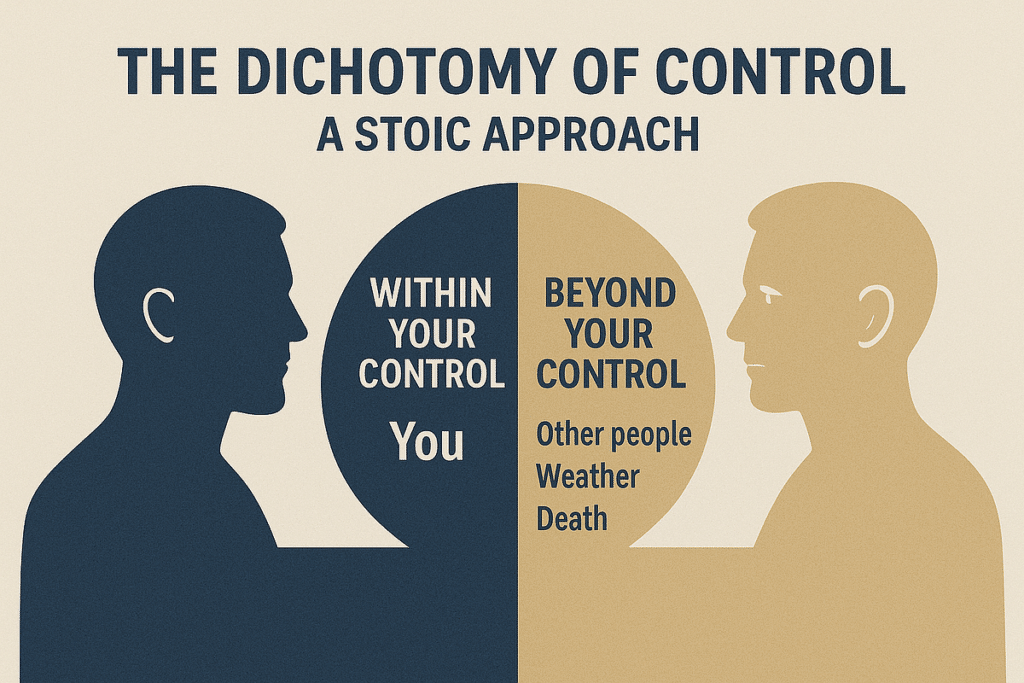


At the heart of Stoic philosophy lies a principle so simple that it is often overlooked. Some things are within your control. Some things are not. Everything else in Stoicism flows from this distinction.
In modern life this boundary is constantly blurred. News cycles social media work pressure and expectations create the illusion that we must manage everything at once. When control is scattered discipline breaks down and frustration follows.
Stoicism offers clarity by narrowing focus. Control is not about domination or force. It is about responsibility. The Stoic principle of control teaches that peace discipline and strength begin by governing only what truly belongs to you.
Stoicism teaches that your thoughts actions values and responses are within your control. Outcomes other people opinions and external events are not.
This distinction is not meant to reduce effort. It is meant to direct it. When energy is wasted on what cannot be controlled discipline weakens. When energy is focused on what can be controlled discipline strengthens naturally.
The Stoic principle of control is an invitation to stop leaking energy into frustration and reclaim it through intentional action.
Modern life rewards reactivity. Notifications demand attention. Opinions invite response. Urgency replaces intention.
Without discipline the mind drifts toward what is loud rather than what is important. This creates stress decision fatigue and emotional volatility.
Stoicism does not remove modern complexity. It provides a filter. Control is regained by choosing where attention is placed and where it is withheld.
Discipline is not forced behavior. It is clarity in action.
When control is understood discipline becomes sustainable. You stop attempting to manage outcomes and begin refining inputs. Effort shifts from anxiety to execution.
Consistency is impossible when control is scattered. Stoicism narrows focus to daily actions that can be repeated regardless of circumstance.
Stoic control is not theoretical. It is practiced through daily awareness and repetition.
Choose responses aligned with values rather than impulse.
Notice emotional reactions without acting immediately. Awareness creates space for choice.
Review actions honestly. Correction strengthens discipline.
Understanding control intellectually is not enough. Without structure consistency fades.
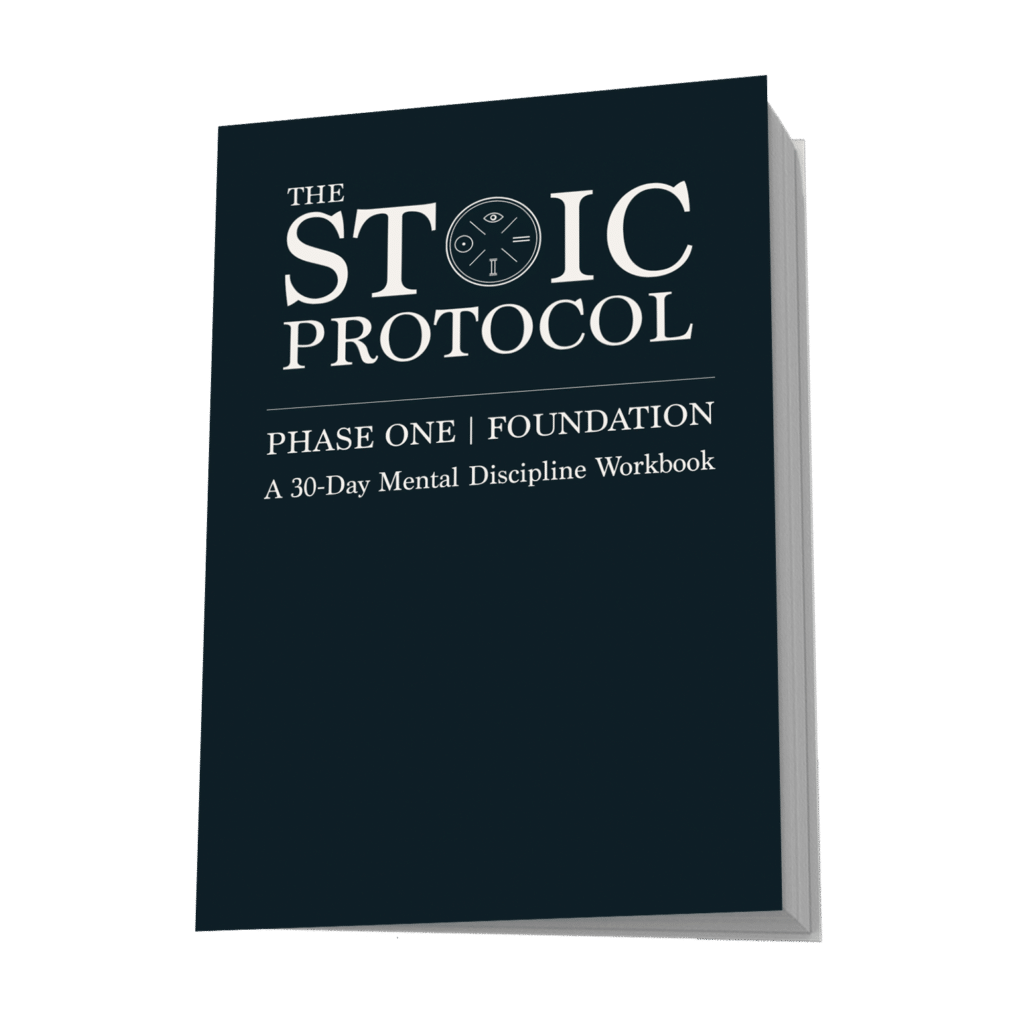
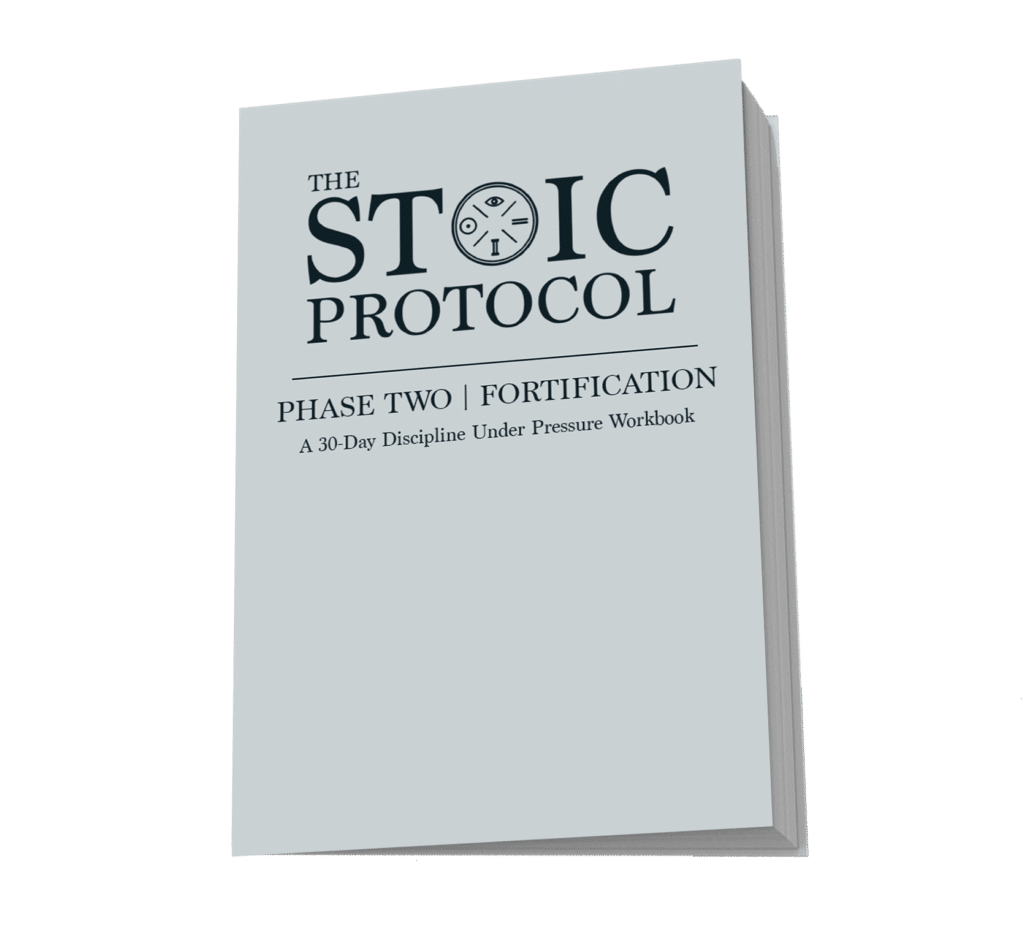
This is where modern Stoic systems become valuable. The Stoic Protocol provides a framework for practicing control daily rather than occasionally.
Stoicism does not restrict life. It refines it.
By releasing what cannot be controlled energy returns to what matters. Discipline becomes steady rather than exhausting.
The Stoic principle of control is not about withdrawal. It is about precision.
When control is respected discipline follows. When discipline follows clarity returns.

FREE SHIPPING is now available.
Start with Phase One or order all three for the complete Stoic Protocol.